logo
Home ProductsConductivity Analyzer

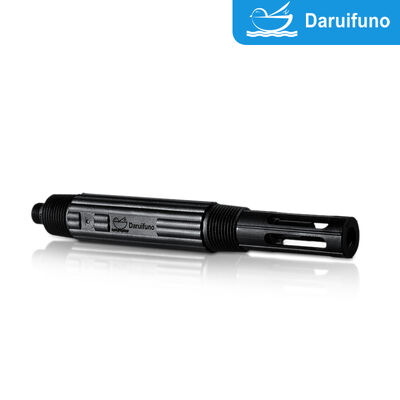
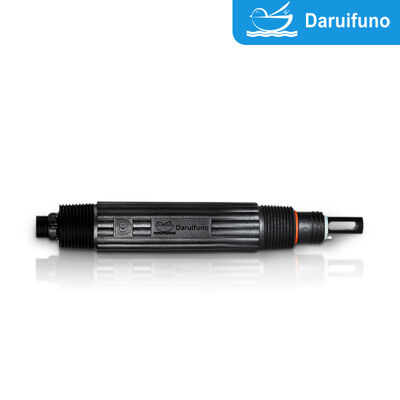
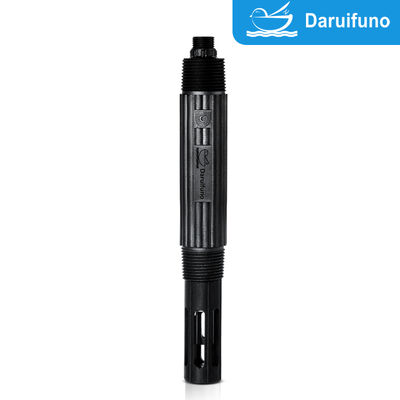
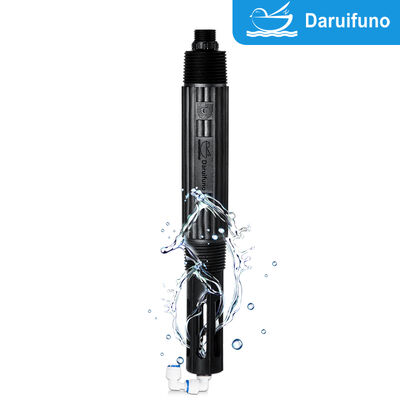
4-in-1 Conductivity Analyzer Probe with Replaceable Measuring Head and Graphite Two Electrode EC Sensor

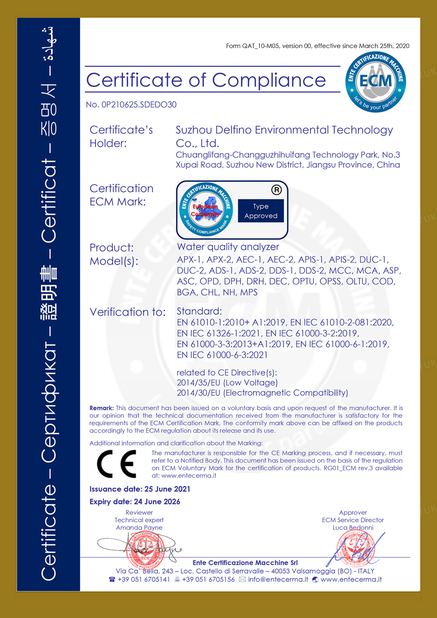
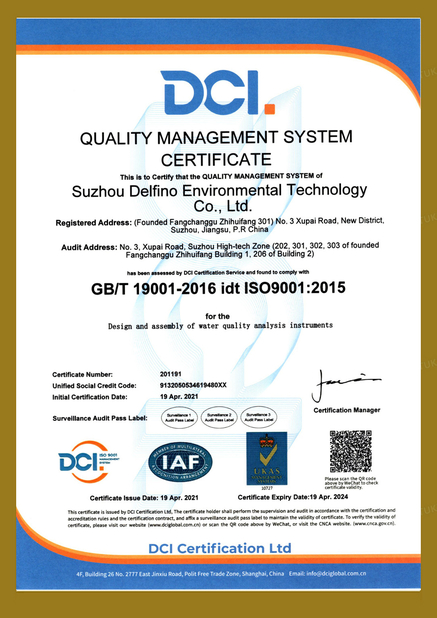
Certification
China Suzhou Delfino Environmental Technology Co., Ltd. certification
I'm Online Chat Now

4-in-1 Conductivity Analyzer Probe with Replaceable Measuring Head and Graphite Two Electrode EC Sensor

4-in-1 Conductivity Analyzer Probe with Replaceable Measuring Head and Graphite Two Electrode EC Sensor
4-in-1 Conductivity Analyzer Probe with Replaceable Measuring Head and Graphite Two Electrode EC Sensor 4-in-1 Conductivity Analyzer Probe with Replaceable Measuring Head and Graphite Two Electrode EC Sensor 4-in-1 Conductivity Analyzer Probe with Replaceable Measuring Head and Graphite Two Electrode EC Sensor 4-in-1 Conductivity Analyzer Probe with Replaceable Measuring Head and Graphite Two Electrode EC Sensor

Large Image :  4-in-1 Conductivity Analyzer Probe with Replaceable Measuring Head and Graphite Two Electrode EC Sensor

Product Details:
Place of Origin: Hangzhou, China
Brand Name: Daruifuno
Certification: CE, ISO 9001
Model Number: DEC790
Payment & Shipping Terms:
Minimum Order Quantity: 1 Piece
Price: USD 100-230 / Piece
Packaging Details: Export carton
Delivery Time: 3-7 working days for samples, 15-20 days for bulk orders
Payment Terms: T/T,Western Union
Supply Ability: 2000 Pieces per Month

4-in-1 Conductivity Analyzer Probe with Replaceable Measuring Head and Graphite Two Electrode EC Sensor

Description
Product Model: DEC790 Parameters: Conductivity, TDS, Salinity, Temperature
Measuring Principle: Graphite Two Electrode Conductivity Range: 0~20uS/cm, 20~200uS/cm, 200~2000uS/cm, 2~10mS/cm
TDS Range: 0~5g/L Salinity Range: 0~5ppt
Temperature Range: 0.0~50.0 C Resolution: 0.01uS/cm
Accuracy: +/-1.0%FS Calibration Points: Up To 5 Points
Measuring Head: Replaceable Module Protection Grade: IP68
Working Pressure: <=6 Bar Power Supply: 9~24VDC
Communication: RS485 MODBUS-RTU Shell Material: PPS
Highlight:

4-in-1 EC TDS Salinity Probe

,

Replaceable Measuring Head Sensor

,

Five Point Calibration EC Probe

Product Overview

The DEC790 is a four-in-one digital water quality probe. It measures conductivity, TDS, salinity and temperature in a single 35 mm PPS body and transmits every value to the control system over RS485 MODBUS-RTU. Instead of installing a conductivity meter, a separate TDS meter, a salinity probe and a temperature transmitter, a plant can drop one sensor into the tank and read all four parameters from one Modbus register block. Wiring, spare parts and calibration workload are all reduced accordingly.

Conductivity is measured with a graphite two-electrode cell. Four ranges are available: 0~20 µS/cm, 20~200 µS/cm, 200~2000 µS/cm and 2~10 mS/cm, with 0.01 µS/cm resolution and ±1.0% FS accuracy. TDS covers 0~5 g/L, salinity covers 0~5 ppt and temperature covers 0.0~50.0 °C. Because graphite suppresses the polarization effect, the probe stays stable in low conductivity water such as condensate, demineralised water and semiconductor rinse water, and also in dirty water where metal electrodes would foul.

4-in-1 Conductivity Analyzer Probe with Replaceable Measuring Head and Graphite Two Electrode EC Sensor

Calibration That Fits Your Process

Three calibration methods are supported. Deviation correction shifts the reading by a fixed offset, factor correction scales the reading by a multiplier, and multi-point calibration fits the response across the full working span. Two-point calibration is normally enough for routine maintenance: measure two samples of known conductivity, calculate the factor and the deviation, and write both values into the sensor registers. When the measuring unit has been replaced, or when the deviation becomes large, a multi-point calibration with 84, 146, 1413 and 12880 µS/cm standard solutions restores linearity across the whole range. Up to five calibration points can be stored, so a plant can keep separate calibration sets for different process water qualities and recall the matching one when needed.

Temperature correction is handled the same way: the sensor measures the water temperature, the operator can apply a temperature deviation value, and all conductivity readings are automatically referred to a 25 °C basis. Calibrate at 25 °C whenever possible to avoid introducing additional temperature compensation error.

Key Advantages
  • Four parameters from one probe. Conductivity, TDS, salinity and temperature are all measured and transmitted by the same sensor, which simplifies skid design and cuts instrument count.
  • Graphite two-electrode cell with low polarization. Stable readings in both ultrapure rinse water and dirty process water, with 0.01 µS/cm resolution and ±1.0% FS accuracy.
  • Up to five-point calibration. Multi-point calibration plus deviation and factor correction lets the probe be matched closely to laboratory reference methods.
  • Automatic temperature compensation and temperature correction. Readings are normalised to 25 °C internally, and a temperature offset can be applied to match a reference thermometer.
  • RS485 MODBUS-RTU digital output. Direct connection to PLC, RTU, data logger or SCADA, with no analog conversion error and no long-distance signal loss.
  • IP68 PPS housing, 6 bar rated. Continuous immersion in tanks and channels, and pressure duty up to 6 bar in closed pipelines.
  • Low power and compact. About 0.2 W from 9~24 VDC, 35 mm diameter and 230 mm long, which suits battery-backed remote stations and compact flow cells.

4-in-1 Conductivity Analyzer Probe with Replaceable Measuring Head and Graphite Two Electrode EC Sensor

Applications
  • Pure water, ultrapure water and demineralised water production lines, where low conductivity verification is critical.
  • Semiconductor and electronics rinse water, where rinse efficiency must be proven before the next process step.
  • Pharmaceutical and food and beverage process water, including CIP and SIP rinse verification.
  • Boiler feed water, condensate and cooling water, where TDS and conductivity together indicate contamination.
  • Pulp and paper process water and white water conductivity logging.
  • Wastewater treatment and surface water monitoring, where salinity and TDS trends matter as much as conductivity.
  • Mining, metallurgy and chemical process water, including brine and saline streams up to 5 ppt salinity.
  • Aquaculture and seawater dilution systems, where salinity and temperature are monitored together.
Communication and Data Handling

The sensor communicates over RS485 using MODBUS-RTU. Factory defaults are address 17, baud rate 9600, no parity and one stop bit; the address, baud rate and register parameters can all be changed through the register map described in the user manual. Measurement values are transmitted as 4-byte floating point numbers in little-endian byte-swapped order, so the master device must be configured with the correct word order. The probe draws about 0.2 W, which means a small 24 VDC supply can power a complete chain of sensors on one bus. Typical integration targets are PLCs, RTUs, data loggers, distributed I/O modules and third-party SCADA platforms.

Maintenance

Maintenance is deliberately simple: a monthly visual inspection and a monthly calibration check, adjusted to the actual water quality. Clean the probe by shaking it in clean water. For heavy organic or mineral fouling, soak the measuring section in a mild detergent or weak acid for 15 minutes, then rinse with distilled water and recheck the calibration.

Do not touch the graphite electrodes with hard objects or wipe them with a cloth, because surface damage changes the cell constant and forces a recalibration. When readings can no longer be restored by cleaning and calibration, replace the measuring head rather than the complete probe.
Technical Parameters
Product Model DEC790
Product Type Digital conductivity sensor / EC probe
Measuring Principle Graphite two-electrode measurement
Conductivity Range 0~20 µS/cm, 20~200 µS/cm, 200~2000 µS/cm, 2~10 mS/cm (four selectable ranges)
TDS Range 0~5 g/L
Salinity Range 0~5 ppt
Temperature Range 0.0~50.0 °C
Resolution 0.01 µS/cm
Accuracy ±1.0% FS
Temperature Compensation Automatic temperature compensation (ATC)
Calibration Deviation correction, factor correction, multi-point calibration (up to 5 points)
Working Temperature 0~50 °C
Working Pressure ≤6 bar
Protection Grade IP68, suitable for long-term immersion
Power Supply 9~24 VDC
Power Consumption About 0.2 W
Communication RS485 MODBUS-RTU, default address 17, 9600 bps, no parity, 1 stop bit
Shell Material PPS (polyphenylene sulfide), chemical and corrosion resistant
Dimension Diameter 35 mm, total length 230 mm
Installation Size 1 inch NPT thread at both ends
Weight About 150 g (cable excluded)
Cable Standard 5 m, length customizable
Connection Method M16 cable gland
Wiring Red V+ power positive, Black V- power negative, White RS485 A(+), Green RS485 B(-)
Calibration Points Up to 5 points
Data Format 4-byte floating point, little-endian byte swap
4-in-1 Conductivity Analyzer Probe with Replaceable Measuring Head and Graphite Two Electrode EC Sensor
Frequently Asked Questions
Q: Which four parameters does the probe measure?

A: Conductivity (four ranges from 0~20 µS/cm to 2~10 mS/cm), TDS (0~5 g/L), salinity (0~5 ppt) and temperature (0.0~50.0 °C). All four are published over the same RS485 MODBUS-RTU interface.

Q: How many calibration points can be stored?

A: The sensor supports up to five calibration points, and two-point calibration is usually sufficient for routine maintenance. Multi-point calibration with 84, 146, 1413 and 12880 µS/cm standards is recommended after replacing the measuring head.

Q: Is the probe suitable for low conductivity pure water?

A: Yes. The graphite cell reduces polarization, which is the main source of drift in low conductivity water, and the resolution is 0.01 µS/cm with ±1.0% FS accuracy.

Q: How is the sensor wired?

A: Four wires: red is power positive (V+), black is power negative (V-), white is RS485 A(+) and green is RS485 B(-). The cable enters through an M16 gland.

Q: Can I read the values from a PLC without a dedicated controller?

A: Yes. Any Modbus RTU master, including a standard PLC with an RS485 module, can read the register block directly. No proprietary controller is required.

Q: What is the warranty and OEM policy?

A: Standard warranty and OEM branding options are available. Please include your required quantity, cable length and branding requirements in the inquiry so that we can quote the correct configuration.

4-in-1 Conductivity Analyzer Probe with Replaceable Measuring Head and Graphite Two Electrode EC Sensor

Contact Details
Suzhou Delfino Environmental Technology Co., Ltd.

Contact Person: Yuki Fu

Tel: +8615716217387

Send your inquiry directly to us (0 / 3000)