|
Product Details:
|
| Product Model: | DEC790 | Installation Thread: | 1 Inch NPT Both Ends |
|---|---|---|---|
| Body Diameter: | 35mm | Total Length: | 230mm |
| Weight: | About 150g Without Cable | Shell Material: | PPS |
| Protection Grade: | IP68 | Working Pressure: | <=6 Bar |
| Working Temperature: | 0~50 C | Measuring Principle: | Graphite Two Electrode |
| Conductivity Range: | 0~20uS/cm To 2~10mS/cm | Temperature Compensation: | Automatic |
| Power Supply: | 9~24VDC | Power Consumption: | About 0.2W |
| Communication: | RS485 MODBUS-RTU | Cable: | 5m Standard, 10m 20m 30m Optional |
| Highlight: | 1 Inch NPT Conductivity Probe,Submersible Pipeline Mounting Probe,230mm PPS Conductivity Sensor |
||
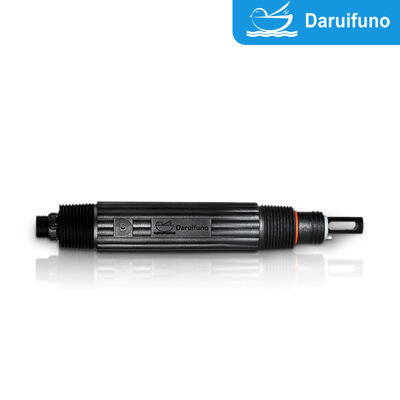
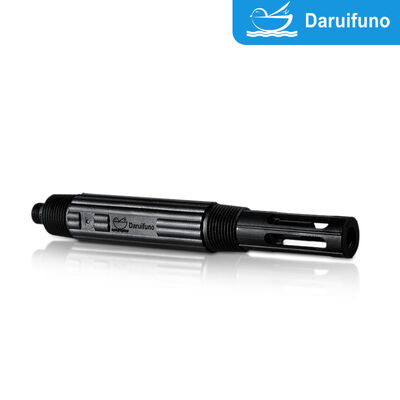
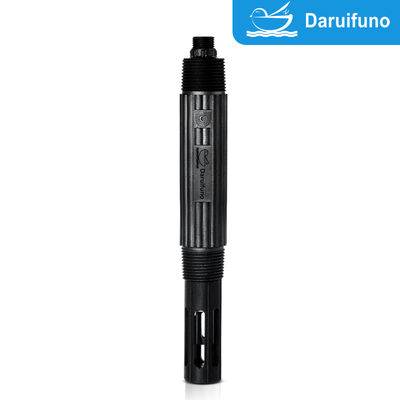
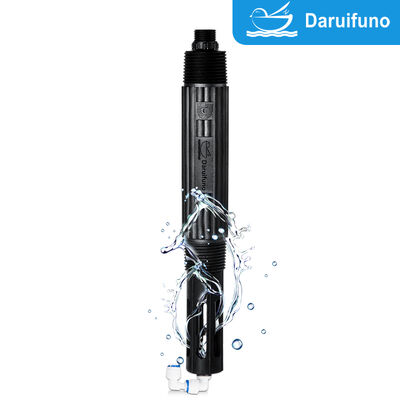
The DEC790 is a 35 mm diameter, 230 mm long digital conductivity probe with a 1 inch NPT thread at both ends. That single mechanical detail is what makes the sensor so easy to deploy: the same probe can be screwed into a pipe tee as an inline transmitter, dropped into a sump as a submersible probe, clamped into a flow-through cell for sample lines, or fixed to a side wall bracket in an open channel. Plants that standardise on the DEC790 keep one spare part instead of four different mounting variants.
Inside the PPS body, a graphite two-electrode measuring cell reads conductivity from 0~20 µS/cm up to 2~10 mS/cm and reports the result as a digital RS485 MODBUS-RTU value. Automatic temperature compensation is applied internally, and the same probe also provides TDS (0~5 g/L), salinity (0~5 ppt) and water temperature (0.0~50.0 °C). No separate transmitter, no analog trimming, no shielded analog cable.
The sealed housing is IP68 rated and the probe weighs around 150 g without cable, so it can hang from its own cable in a wet well without extra support. The standard cable is 5 metres, and customised lengths of 10, 20 or 30 metres are available for deep tanks, remote outfalls and long pipe runs. The M16 cable gland keeps the cable entry watertight even after repeated re-termination in the field.
![]()
Installation conditions decide whether a conductivity sensor survives. The DEC790 is specified for the four mounting styles used most often in water and wastewater plants:
Working pressure is up to 6 bar and the working temperature range is 0~50 °C, which covers the great majority of municipal water, sewage and light industrial duties. Keep the cable away from power cables and never bind the sensor lead to a motor or pump feeder, because electrical noise disturbs the measurement and damaged insulation can break down the measuring unit.
![]()
![]()
The sensor uses a four wire connection: red for V+ power positive, black for V- power negative, white for RS485 data A(+) and green for RS485 data B(-). Default communication settings are address 17, baud rate 9600, no parity and one stop bit, and these can be changed through the Modbus register map. Measurement data is transmitted as 4 byte floating point values in little endian byte swapped order, so the Modbus master configuration must use the matching word order. Refer to the register table in the user manual before writing any parameter.
Only a monthly visual inspection and a monthly calibration check are required, and the interval can be relaxed once the trend is known. Clean the probe by shaking it in clean water. For heavy fouling, soak the measuring section in a mild detergent or weak acid for 15 minutes and rinse with distilled water. Never scrape the electrode surface with a hard object or wipe it with a cloth, because mechanical damage to the graphite surface forces a recalibration and in severe cases reduces the usable measuring range.
| Product Model | DEC790 |
|---|---|
| Product Type | Digital conductivity sensor / EC probe |
| Measuring Principle | Graphite two-electrode measurement |
| Conductivity Range | 0~20 µS/cm, 20~200 µS/cm, 200~2000 µS/cm, 2~10 mS/cm (four selectable ranges) |
| TDS Range | 0~5 g/L |
| Salinity Range | 0~5 ppt |
| Temperature Range | 0.0~50.0 °C |
| Resolution | 0.01 µS/cm |
| Accuracy | ±1.0% FS |
| Temperature Compensation | Automatic temperature compensation (ATC) |
| Calibration | Deviation correction, factor correction, multi-point calibration (up to 5 points) |
| Working Temperature | 0~50 °C |
| Working Pressure | ≤6 bar |
| Protection Grade | IP68, suitable for long-term immersion |
| Power Supply | 9~24 VDC |
| Power Consumption | About 0.2 W |
| Communication | RS485 MODBUS-RTU, default address 17, 9600 bps, no parity, 1 stop bit |
| Shell Material | PPS (polyphenylene sulfide), chemical and corrosion resistant |
| Dimension | Diameter 35 mm, total length 230 mm |
| Installation Size | 1 inch NPT thread at both ends |
| Weight | About 150 g (cable excluded) |
| Cable | Standard 5 m, length customizable |
| Connection Method | M16 cable gland |
| Wiring | Red V+ power positive, Black V- power negative, White RS485 A(+), Green RS485 B(-) |
A: Both ends of the sensor are machined with a 1 inch NPT thread, so standard NPT tees, flanges, bushings and submersible brackets can be used directly without an adapter.
A: Yes, the working pressure is up to 6 bar. Install the probe at a low point of the run where the pipe stays full and where bubbles are unlikely to accumulate on the measuring face.
A: The standard cable is 5 metres. Customised lengths such as 10, 20 or 30 metres are available for deep wells, long pipe runs and floating stations.
A: No. Temperature is measured inside the probe and automatic temperature compensation is applied internally, with the compensated value published over Modbus.
A: Multiple probes can be connected to the same RS485 bus as long as each one is given a unique Modbus address. The factory default address is 17, so remember to change it before adding the second probe.
A: Shake it in clean water first. For stubborn deposits, soak the measuring section in a mild detergent or weak acid for 15 minutes and rinse with distilled water. Do not use abrasive pads or hard tools on the graphite electrode.
![]()
Contact Person: Yuki Fu
Tel: +8615716217387